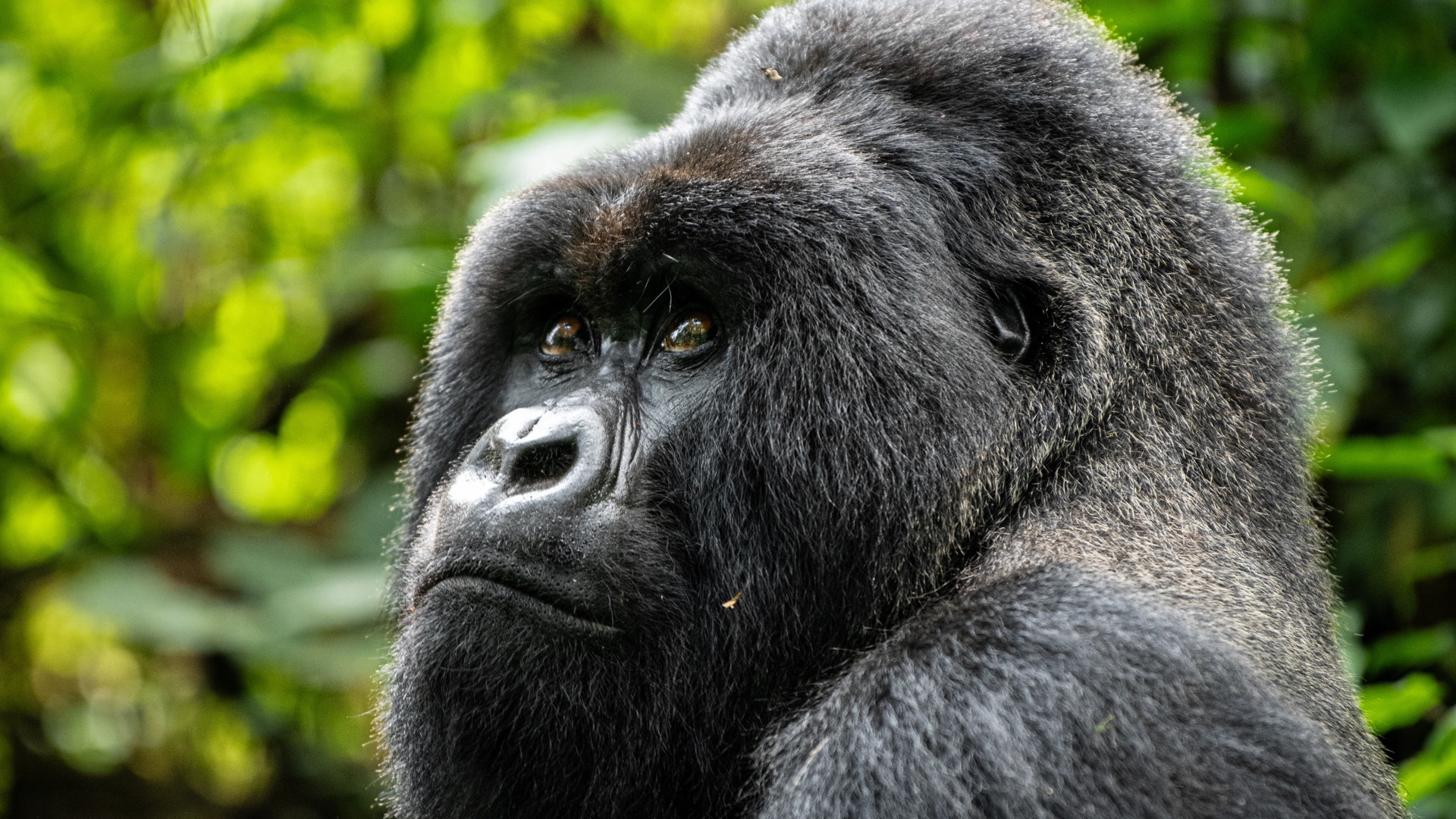
The forest countries
Where the top end buys you the least additional access
Permits are issued by an authority at a set price, and the hour with the family is the same hour whatever the lodge cost.
Rwanda: the permit dominates
On a Rwandan trip the gorilla permit is frequently the largest single line on the invoice. It is set by the authority, it is the same for everybody, and no lodge can obtain a different version of it.
The lodge field near Volcanoes is small and concentrated, and a good deal of it sits at the top of the market. That produces an unusual shape: there is not much of a middle, the top end is expensive, and the differences between the best lodges are hospitality rather than access.
What the money genuinely buys is the drive to park headquarters in the morning, the room you come back to with wet boots, the food, and the fire. On a trip where the central hour is fixed and identical for everyone, those things matter more than they sound.
What Rwanda is unusually good at
- A complete short trip. Six nights works here and works nowhere else on this list — two hours on tarmac from an international airport, and no internal flights at all.
- Pairing with Kenya. A two-hour scheduled jet from Nairobi, and a second half that repeats nothing from the first.
- Golden monkeys and Nyungwe, which add a second and third forest experience without a long move.
- Genuine comfort at altitude, which after a wet tracking day is not a frivolous consideration.
Uganda: thin, and worth going anyway
Uganda has a small number of genuinely excellent lodges and a great deal that is good rather than exceptional. If hospitality is the axis you are choosing on, it is not this country, and we would rather say that than dress it up.
What Uganda has instead is a longer list of things to do. Gorillas at a lower permit price than Rwanda, chimpanzees in Kibale, tree-climbing lions in Ishasha, the Nile at Murchison, and a road-based trip that costs considerably less.
For a traveller who is there for the animals and relaxed about the beds, it is excellent value and a fuller two weeks. For one who wants every night to be remarkable, it is not.
The comparison people actually want
| Rwanda | Uganda | |
|---|---|---|
| Permit cost | Higher, and the largest line on most invoices | Lower, meaningfully |
| Getting there | Two hours on tarmac from Kigali | A long drive, or a flight plus a drive |
| Trek difficulty | Variable; often shorter, at altitude | Variable; often longer, through denser forest |
| Lodge field | Small, concentrated, mostly top end | Thin at the top, broad in the middle |
| Other primates | Golden monkeys, chimpanzees at Nyungwe | Chimpanzees at Kibale — the best habituated tracking here |
| Whole-trip cost | Higher, and shorter | Lower, and you can stay longer |
Neither is better. Rwanda is the answer for a short, comfortable, expensive trip; Uganda for a longer, fuller, cheaper one.
What nobody should tell you
That a more expensive lodge improves your gorilla tracking. Group sizes are fixed, permits are allocated by the authority, and the hour is the hour.
What a lodge can affect is how far you drive to the briefing, how well you sleep at altitude and what happens to your soaked clothing afterwards. Those are real. They are not access.
Ready to turn this into a real itinerary?
Send us your dates, who is travelling and roughly what you want to spend per person per night. Our East Africa specialist comes back within 24 hours with a plan built around them and a costed quote.